
Comparison has become a part of almost every student’s life. Whether it is comparing marks, ranks, study hours, or achievements, students often measure their progress by looking at others. With the rise of social media and increasing academic competition, this habit has become even more common. While a healthy sense of competition can encourage improvement, constant comparison often creates unnecessary pressure, lowers confidence, and affects academic performance. Every student has a unique journey, and understanding why comparison is harmful is essential for building a healthy and successful approach to learning.
Every Student Has a Different Learning Journey

No two students are exactly alike. Some understand concepts quickly, while others need more time and practice. Some are naturally good at Mathematics, while others excel in Biology or languages. Students also come from different educational backgrounds, learning environments, and personal circumstances. Comparing your progress with someone else’s ignores these differences and creates unrealistic expectations. Success should be measured by how much you have improved compared to your past performance, not by someone else’s achievements.
Comparison Creates Unnecessary Stress
When students constantly compare themselves with classmates or toppers, they often begin to feel that they are falling behind. This creates anxiety, self-doubt, and pressure to perform at the same level as others. Instead of focusing on learning, students become obsessed with scores, ranks, and competition. This emotional stress reduces concentration and makes studying more difficult. Academic success becomes much harder when the mind is occupied with worrying about others instead of improving itself.
Confidence Begins to Decline
Self-confidence grows when students recognize their own progress and celebrate small achievements. However, constant comparison shifts attention away from personal improvement and toward perceived shortcomings. Even students who are performing well may start feeling inadequate if they continuously compare themselves with someone who scores slightly higher. Over time, this weakens confidence and creates the false belief that they are not capable enough to succeed. A lack of confidence often affects classroom participation, decision-making, and overall academic performance.
Everyone Has Different Strengths and Weaknesses
Every student possesses unique talents and areas for improvement. One student may solve Physics problems exceptionally well, while another may excel at writing detailed Biology answers or communicating ideas effectively. Focusing only on someone else’s strengths while ignoring your own abilities creates an unfair comparison. Education is not about proving that everyone is equally good at everything. It is about identifying individual strengths and working consistently to improve weaker areas.
Social Media Often Shows an Unrealistic Picture
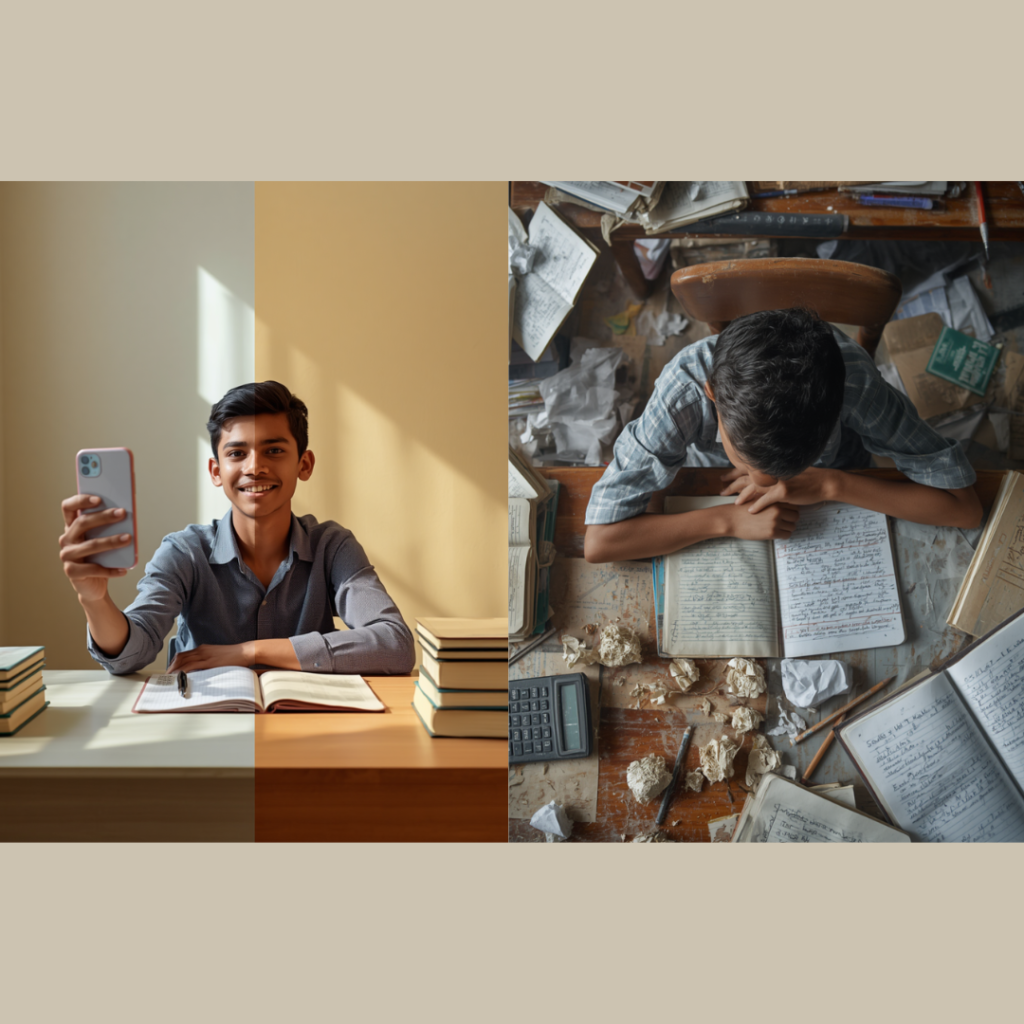
Today, many students compare themselves with people they see on social media. They come across posts showing long study hours, perfect notes, high scores, and seemingly effortless success. However, social media rarely shows the struggles, failures, stress, or hard work behind those achievements. Comparing your real life with someone else’s carefully selected highlights creates unrealistic expectations. Students should remember that social media reflects only a small part of reality, not the complete journey.
Comparison Can Reduce Motivation
Many students believe that comparing themselves with toppers will inspire them to work harder. While this may happen occasionally, excessive comparison usually has the opposite effect. When students constantly feel they are not good enough, they may lose hope and begin to believe that success is beyond their reach. This negative mindset often leads to procrastination and reduced effort. True motivation comes from setting personal goals and working steadily toward achieving them rather than trying to match someone else’s pace.
Personalized Learning Focuses on Individual Growth
The purpose of education is not to make every student identical but to help each learner reach their full potential. Personalized learning recognizes that every student has different strengths, weaknesses, and learning speeds. Instead of comparing students with one another, it focuses on helping each student improve from their current level. This is why institutions like Igniters for Tomorrow emphasize personalized mentorship, regular progress tracking, and customized study plans. When students receive guidance based on their individual needs, they gain confidence and achieve better results without the pressure of unhealthy comparison.
Healthy Competition Is Better Than Unhealthy Comparison

Competition and comparison are often confused, but they are very different. Healthy competition encourages students to improve their own performance while appreciating the achievements of others. Unhealthy comparison, on the other hand, creates jealousy, insecurity, and constant dissatisfaction. Students should view successful classmates as sources of inspiration rather than as standards against which they must measure themselves. Learning from others while staying focused on personal improvement creates a much healthier and more productive mindset.
Conclusion
Comparing yourself with others may seem natural, but it often does more harm than good. It increases stress, reduces confidence, weakens motivation, and distracts students from their own growth. Every learner has a unique path, different abilities, and individual goals. Academic success is not about being better than everyone else; it is about becoming better than you were yesterday. By focusing on consistent effort, self-improvement, and personalized guidance, students can build confidence, enjoy learning, and achieve lasting success without the burden of constant comparison.
Leave a Reply